

Starting treatment does not close the door on improving your blood pressure—or reassessing what you need.
“Do I have to take medication for my blood pressure?”
Sometimes that question is about the medication itself. But sometimes the question underneath it is:
If I start, does that mean I can never stop?
That is the part of the conversation I want to slow down.
Starting a blood pressure medication is a decision about what your body needs now. It is not a prediction of everything your body will need for the rest of your life.
I cannot promise that you will eventually come off it. But taking medication does not close the door on improving your health, and it does not mean the work you put into your food, activity, sleep, and stress has stopped mattering.
So the question I want us to answer is not, “How do we avoid medication?”
It is, “How do we protect you now while we work on what may be raising your blood pressure?”
What treatment is for
We treat high blood pressure to lower the risk of stroke, heart disease, and kidney damage. Current guidelines recommend lifestyle changes for everyone with elevated blood pressure, and add medication based on how high the blood pressure is and on each person’s overall cardiovascular risk.professional.heart+1
That distinction matters.
A person taking no medication is not automatically healthier than a person taking two. If the first person’s blood pressure stays too high and the second person’s is well controlled, counting pills tells us very little about who is better protected.
Medication burden still matters. Side effects, cost, and the daily hassle of taking pills deserve attention, and I want your plan to be both effective and manageable. But fewer medications should be the result of a safe plan, not the yardstick for every decision.
Room to improve
This is where I want to understand your daily life.
What does eating look like on an ordinary workday? How much salt is finding its way into your meals? How much do you move? Is alcohol part of the picture? Would weight loss help you? How are you sleeping? What happens to your routines when life gets stressful?
These questions are not meant to find something you have done wrong. They are meant to find where there is room to help.
A heart-healthy eating pattern, less sodium, regular physical activity, weight management when appropriate, less alcohol, and stress management are all recommended parts of blood pressure care. They matter whether or not you take medication.ahajournals+1
I also want to know what makes these changes hard to keep. A plan that looks excellent on paper is not much use if it does not fit the life you actually live.
You do not need to live perfectly. You need changes you can realistically make, keep making, and measure.
What “naturally” means
Many people ask whether they can lower their blood pressure naturally. I am interested in that question, but I want us to be precise about what it means.
If “naturally” means improving how you eat, moving more, cutting back on excess sodium, and finding a workable way to handle stress, those are central parts of treatment. They are not alternatives we try only after medication fails. The current guidelines even name approaches such as meditation, breathing exercises, and yoga as options for managing stress.ahajournals+1
If “naturally” means replacing a prescription with a collection of supplements, that is a different conversation.
Patients often ask me about magnesium, garlic, beets, omega-3s, and hibiscus. I do not want to dismiss those questions, but I do want to separate what has been studied from what has been established. The National Center for Complementary and Integrative Health describes the evidence for several of these, including garlic, omega-3 supplements, and hibiscus, as limited, with generally small effects on blood pressure. It also notes that no dietary supplement has been shown to match blood pressure medications.nccih.nih+1
That does not make every food or supplement useless. It means we should not treat all approaches as equally proven, or assume something can stand in for treatment just because it is called natural.
I would rather start with an eating pattern you can sustain than hand you a shopping list of supplements. And I would rather help you find a stress practice you will actually use than tell you to “just relax.” A positive outlook can help you stay engaged. It should never become another reason to blame yourself if your blood pressure stays high.
Waiting versus treating now
Do we have to wait for lifestyle changes to work before starting medication? Not always.
Some people with mildly elevated blood pressure and lower cardiovascular risk can begin with a monitored period of lifestyle changes alone. Others have blood pressure levels or medical risks that make medication appropriate alongside those changes from the start. The guidelines distinguish between these situations; they do not prescribe the same waiting period for everyone.professional.heart
So I do not see medication and lifestyle as competing choices. We may need to treat your blood pressure now while you work on what could improve it over time.
Taking a tablet does not cancel out a walk. It does not make a change in your eating meaningless. And it does not remove your role in your own care. It gives us another tool.
Could you need less medication someday?
Possibly. But I would rather leave room for that possibility than make you a promise.
First, I want to know whether there is something we can meaningfully improve. Then I want to see what happens when you work on it.
I want to see a consistent record over time, not one reassuring reading or one alarming one. Tell me what your days have been like, what you have changed, and how you have been feeling.
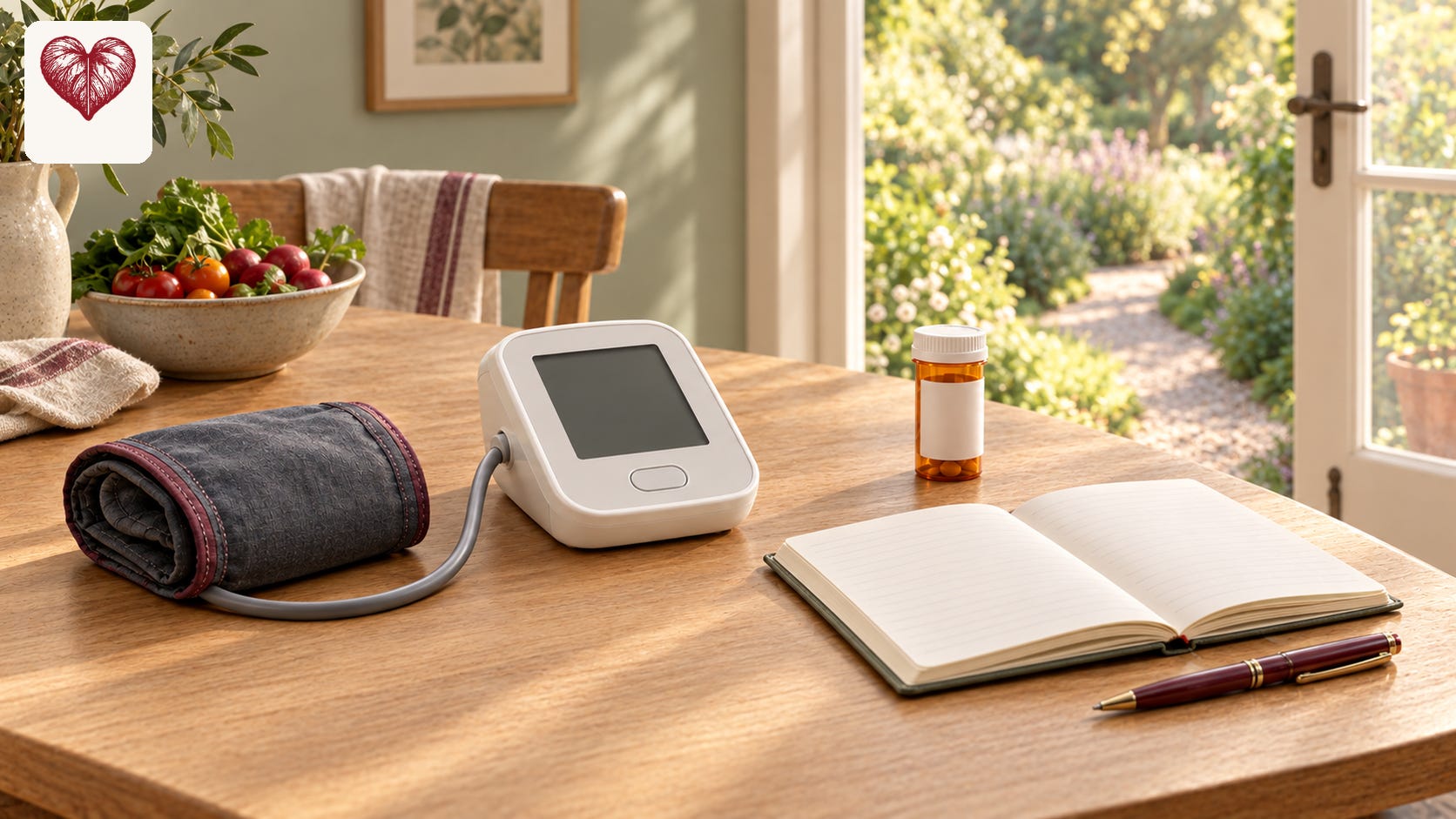
This is where your home blood pressure record becomes part of the conversation. Bring all the readings, not just the lowest number you remember. Tell me which changes have been sustainable and which have been difficult to keep.
If that pattern gives us a reason to reconsider your medication, we can talk about an adjustment together. Please do not cut back or stop on your own. A good reading while you are taking medication may simply mean the medication is doing its job. And some blood pressure medications also serve another purpose in your care, such as protecting the heart or kidneys, so we need to account for that too.
The real question becomes:
Does your current treatment still fit your current needs?
That is very different from deciding on day one that you must eventually come off everything.
If you still need medication
Then I do not want you to see that as failure.
We should look at what has improved, what is still difficult, and whether your treatment is effective and manageable—not simply whether we have crossed a prescription off the list.
You do not have to prove that you can do this naturally. You do not have to give up your interest in nutrition because you take a prescription. And you do not need to keep adding supplements just to feel that you are doing enough.
When I recommend medication, I am not saying, “There is nothing else you can do.”
I am saying, “Your blood pressure needs attention. Medication may be part of how we address it, and there is still work we can do together.”
That work should be specific enough to begin. Instead of sending you home with instructions to change everything, I would rather we choose a manageable starting point.
What can you change this week? What might get in the way? What will we review when you come back?
We build from there.
Protection, not a pill count
I understand why hearing that you need medication can feel like a door closing. You may hear the start of a lifelong obligation when you were hoping for a way to take back control.
But we are making a decision about where you are now. We can revisit that decision as we learn how you respond.
So when you ask, “Do I have to take blood pressure medication for the rest of my life?” my honest answer is:
“I cannot know that today. Let’s control your blood pressure, work on what we can improve, and reassess your treatment as we go.”
You may eventually need less medication. You may continue to need it. Neither outcome, on its own, tells us whether you have succeeded.
The number of medications is not the goal. Protecting your health is.
This article is for education and does not replace individualized medical care. Discuss medication changes with your treating clinician.
If this helped you think differently about blood pressure treatment, consider sharing it with someone who has asked the same question.